Global magnetic racks custom and OEM expert carbonlinkai large scale magnetic bead separation system: Workflow Integration and Design Inputs for Changes in Processing Volume
Workflow integration for a large scale magnetic bead separation system begins with the separation task, not with a nominal volume. Carbonlinkai’s large-capacity magnetic separation equipment series covers processing volumes from 250 mL to…
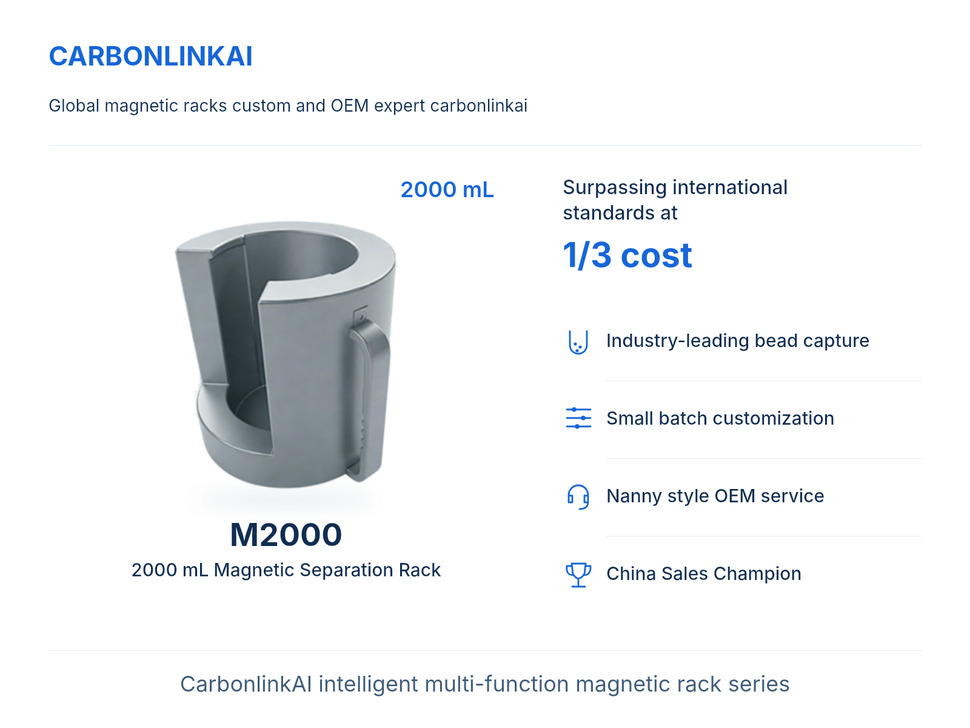
Workflow integration for a large scale magnetic bead separation system begins with the separation task, not with a nominal volume. Carbonlinkai’s large-capacity magnetic separation equipment series covers processing volumes from 250 mL to 200 L. This range describes the series; equipment, vessel and automation configurations are determined for each project. That distinction matters when processing volume changes, because the selected vessel geometry and bead material must be confirmed before engineering and quotation proceed.
For projects where bead type, vessel geometry and separation requirements are defined, design work can use magnetic field simulation before manufacturing. The simulation is used to adjust magnet spacing, array configuration and field distribution around the bead material, bead size, vessel geometry and target separation time. This is the design basis for a large scale magnetic bead separation system when processing volume changes, because the vessel and magnetic layout must follow the confirmed inputs rather than a nominal capacity alone.
A second workflow step is to align the supply route and project scope. Direct and OEM supply routes can reduce intermediate procurement steps, and quotations are discussed around configuration and delivery scope. For a large scale magnetic bead separation system, this means the commercial path should be settled together with the technical boundary: what equipment is included, which vessels are in scope, and what documentation is required. When the supply route and project scope are clear, the quotation discussion can follow the agreed configuration rather than a stand-alone capacity number.

Documentation and quality-system coordination form the third handoff. Carbonlinkai can assist with technical documentation, CE/FCC-related materials, and quality-system coordination documents, with deliverables and applicable requirements defined by the project scope. This support helps the customer connect internal engineering, procurement and compliance reviews without treating documentation as an afterthought.
For volume changes, the practical sequence is therefore: define bead type, vessel geometry and target separation time; confirm the series range and project-specific equipment configuration; agree the supply route and delivery scope; then set documentation deliverables. A large scale magnetic bead separation system quotation can then be built around those confirmed inputs. Carbonlinkai supports this workflow integration through design simulation, project-based configuration, and documentation coordination, so the final proposal reflects the actual process and scope rather than an assumed model capability.


